
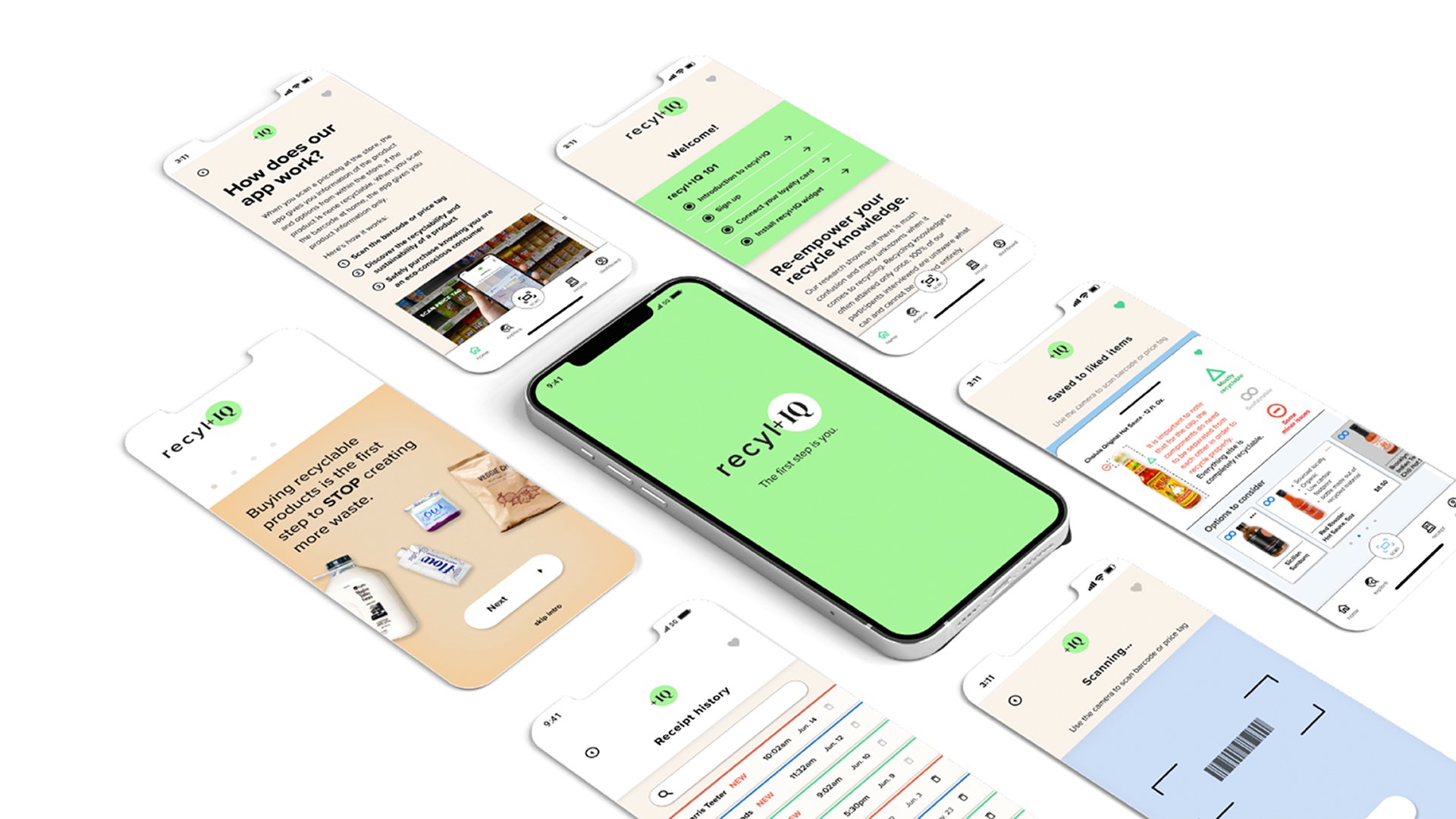
recyl+iQ
UX Research + Strategy / Mobile App
Pre-purchase intelligence, built from a knowledge gap.
The recycling gap is a timing problem, not a motivation problemA single interaction: scan, assess, chooseSustainability exists on a spectrum. The framework was designed to reflect it
The Gap
Everybody knows recycling matters. Yet it has become so systematically confusing that the trouble outweighs the benefit. Most people don't know what can be recycled where, when, or how. For many, the result is a valiant effort wasted on recycling outlets that disregard protocol and dump it all as trash anyway.

The Solution
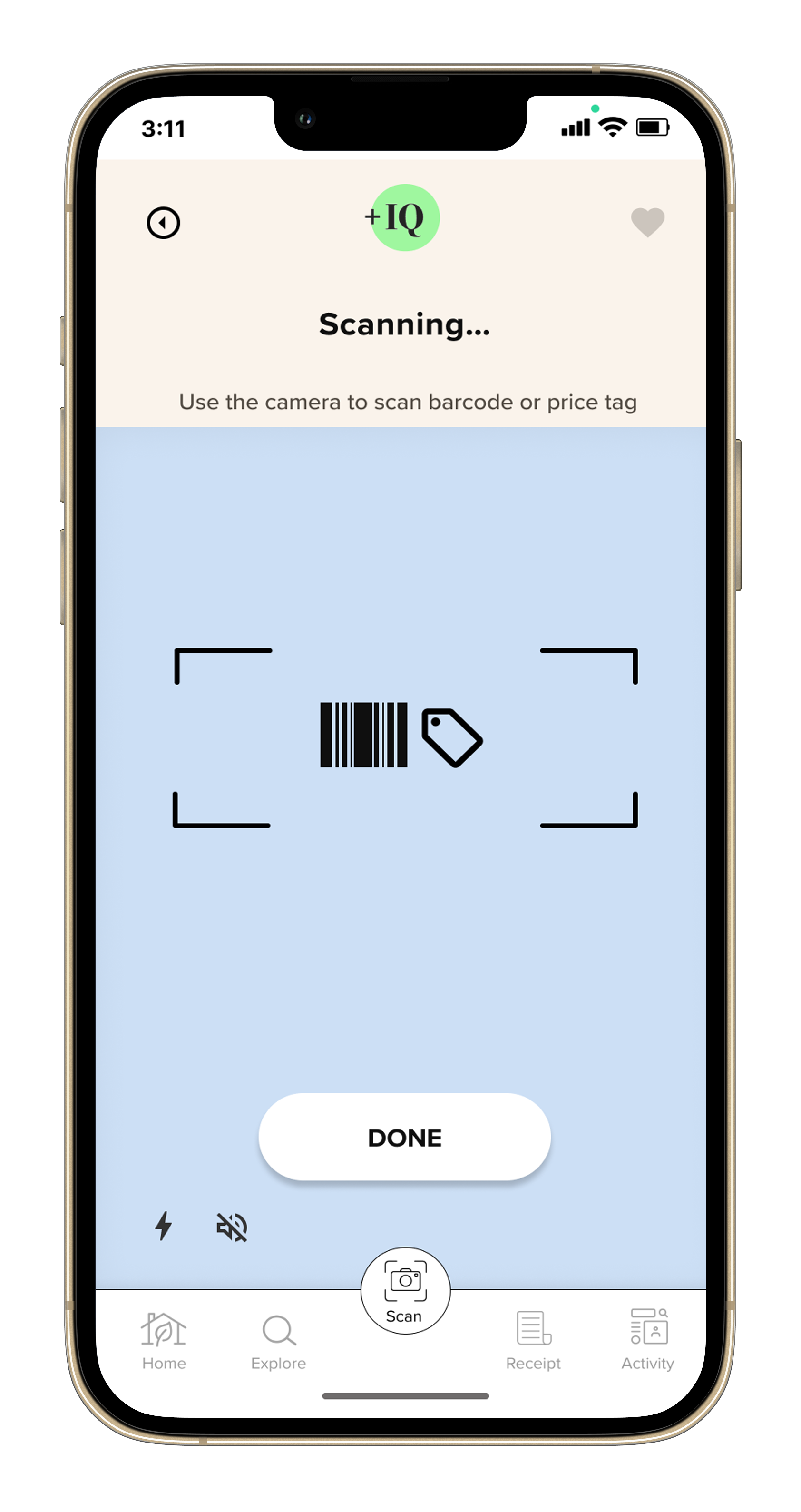
Imagine knowing a product's sustainability impact before it ever lands in your cart. Where the choice to do better is available at the moment it still matters. Recycl+iQ makes this possible. By scanning a product at the shelf, users receive an immediate sustainability assessment and see better alternatives with specific attributes and price. The information arrives before the decision is made, not after. For people who already want to make better choices, that is all they need.
Knowledge Before Purchase
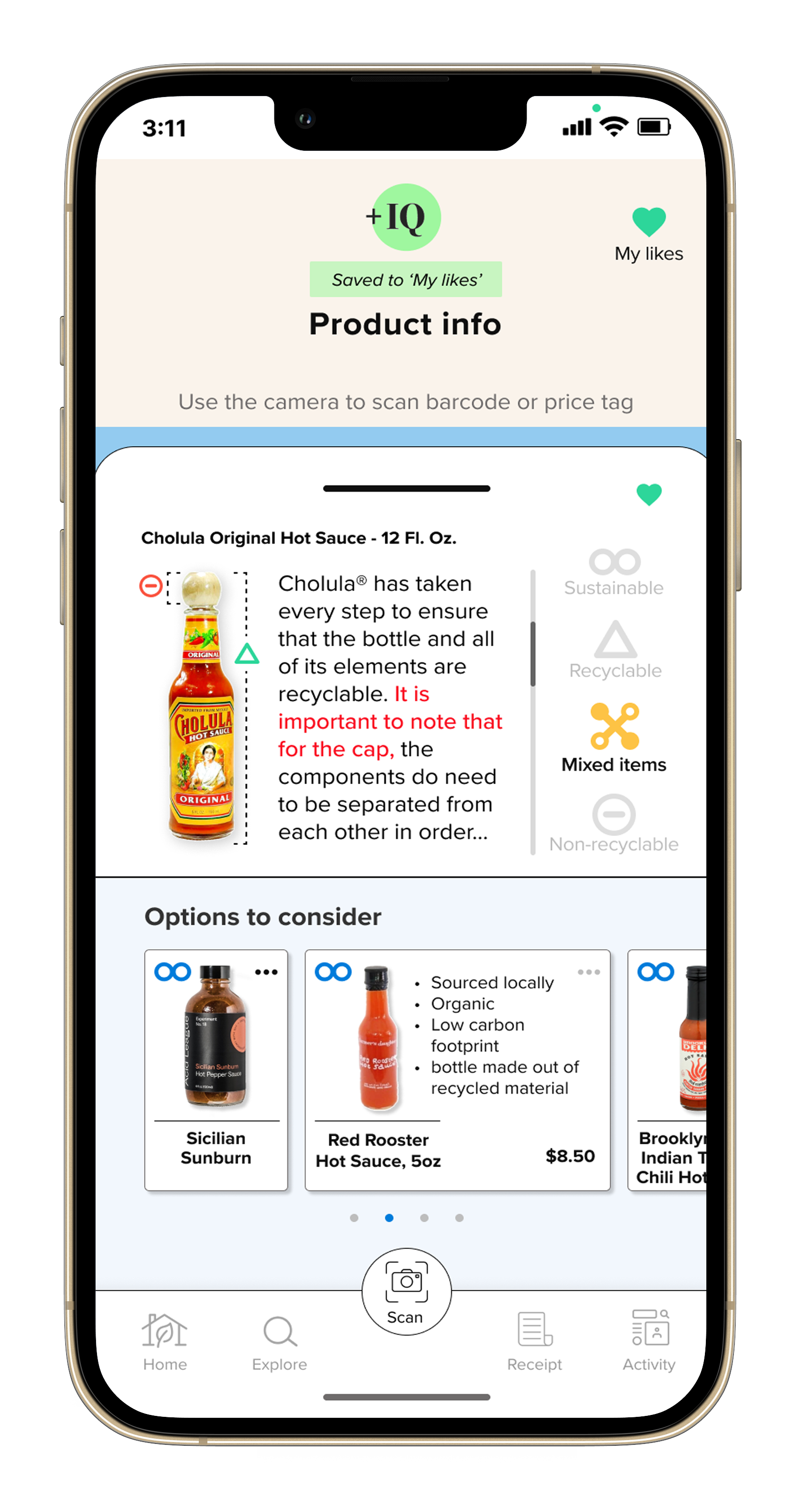

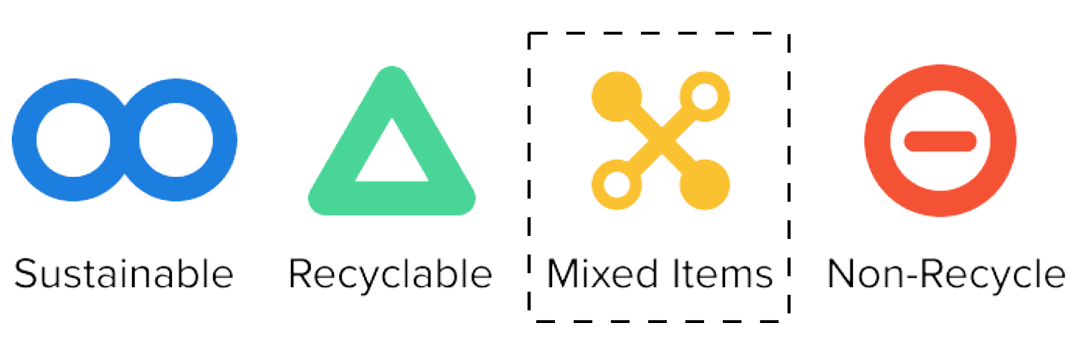
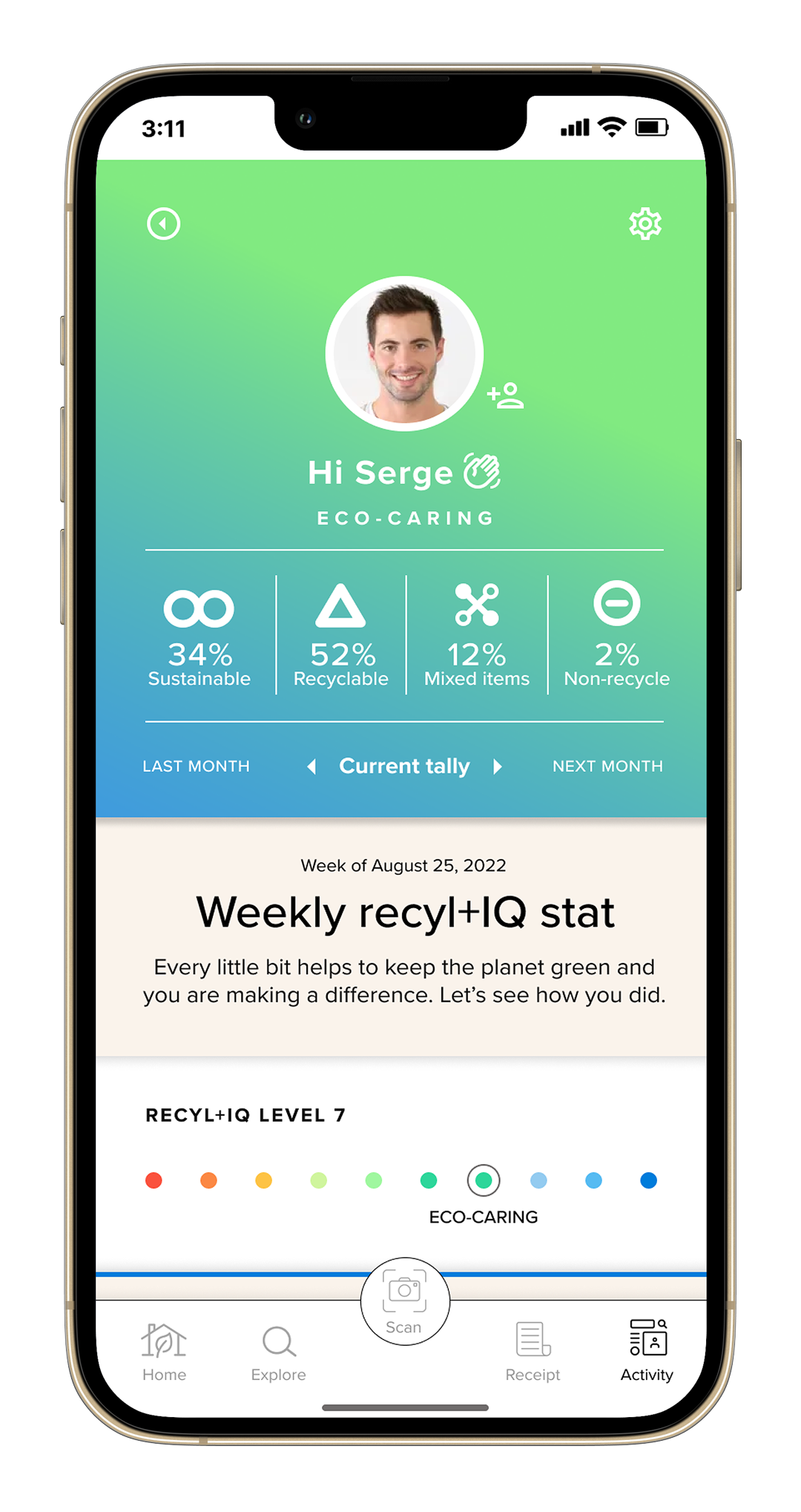
Not all products fit neatly into recyclable or non-recyclable categories. Many exist somewhere in between, with components that require different handling or disposal methods. Rather than reduce that complexity to a simple pass or fail, Recycl+iQ uses a four-tier sustainability framework: Sustainable, Recyclable, Mixed Items, and Non-Recyclable.
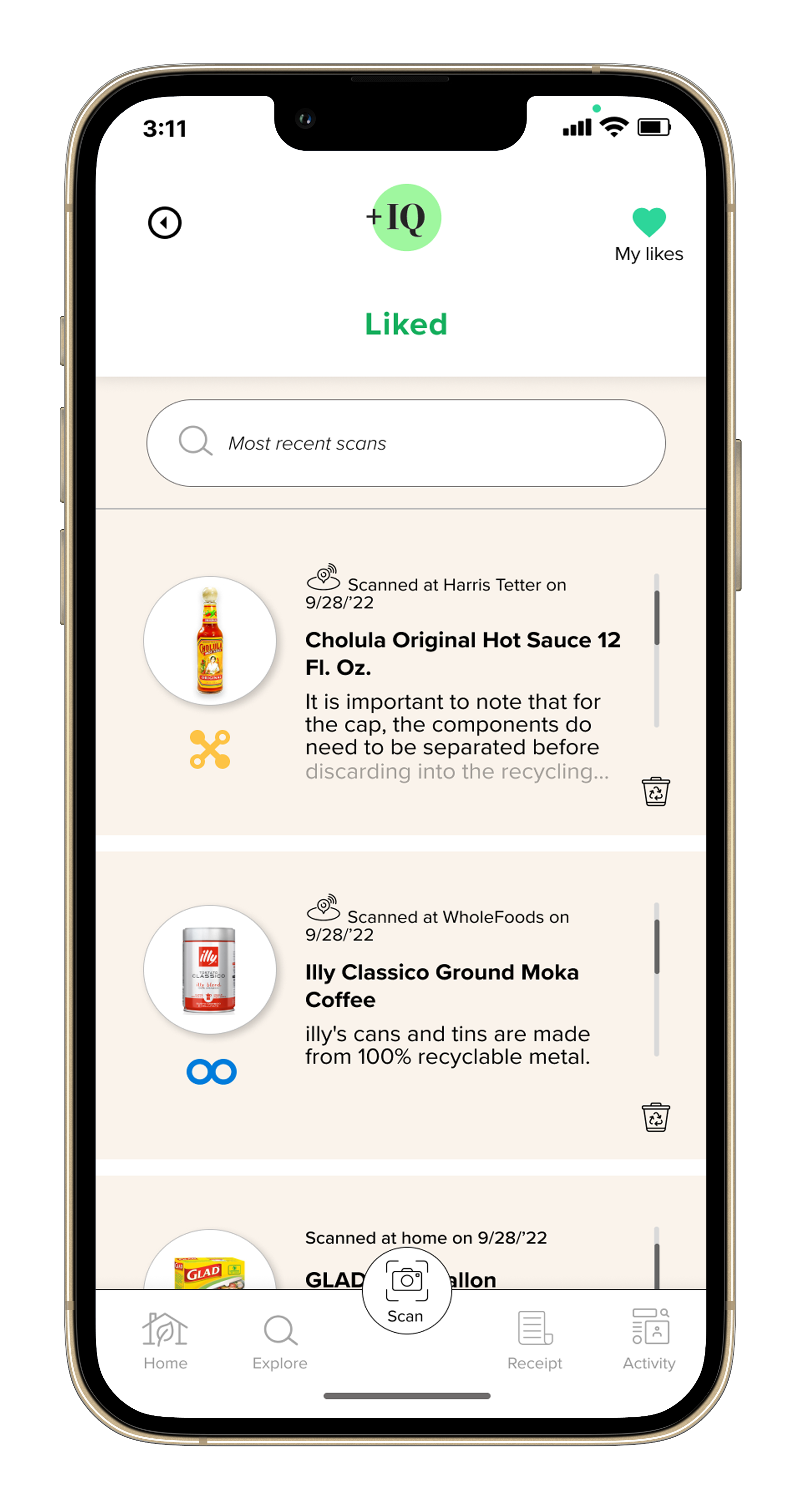
Each classification communicates a different level of environmental impact and consumer responsibility. The Mixed Items category plays a particularly important role. A bottle may be recyclable, for example, but require the cap to be separated before disposal. Rather than hide that complexity, Recycl+iQ surfaces it directly within the product details so users understand both the product and the action required.
By providing this information before purchase, users can make more informed decisions at the shelf, not after the product has already been brought home.
The sustainable framework
User testing revealed that participants struggled to distinguish products that were recyclable from products that were only partially recyclable. Existing iconography forced multiple conditions into the same classification, creating confusion and reducing confidence in the information being presented.
To resolve this, Recycl+iQ introduced a four-tier sustainability framework that separated Sustainable, Recyclable, Mixed Items, and Non-Recyclable into distinct states aligned with user expectations.
Scan and Know
The entire product lives in one interaction. Point. Scan. Know. A barcode or price tag is all it takes to receive an immediate sustainability assessment and see better alternatives before the purchase is made. No research required. No tab-switching. No post-purchase regret. The information arrives in the hand that is already holding the phone, at the only moment it can actually change anything.

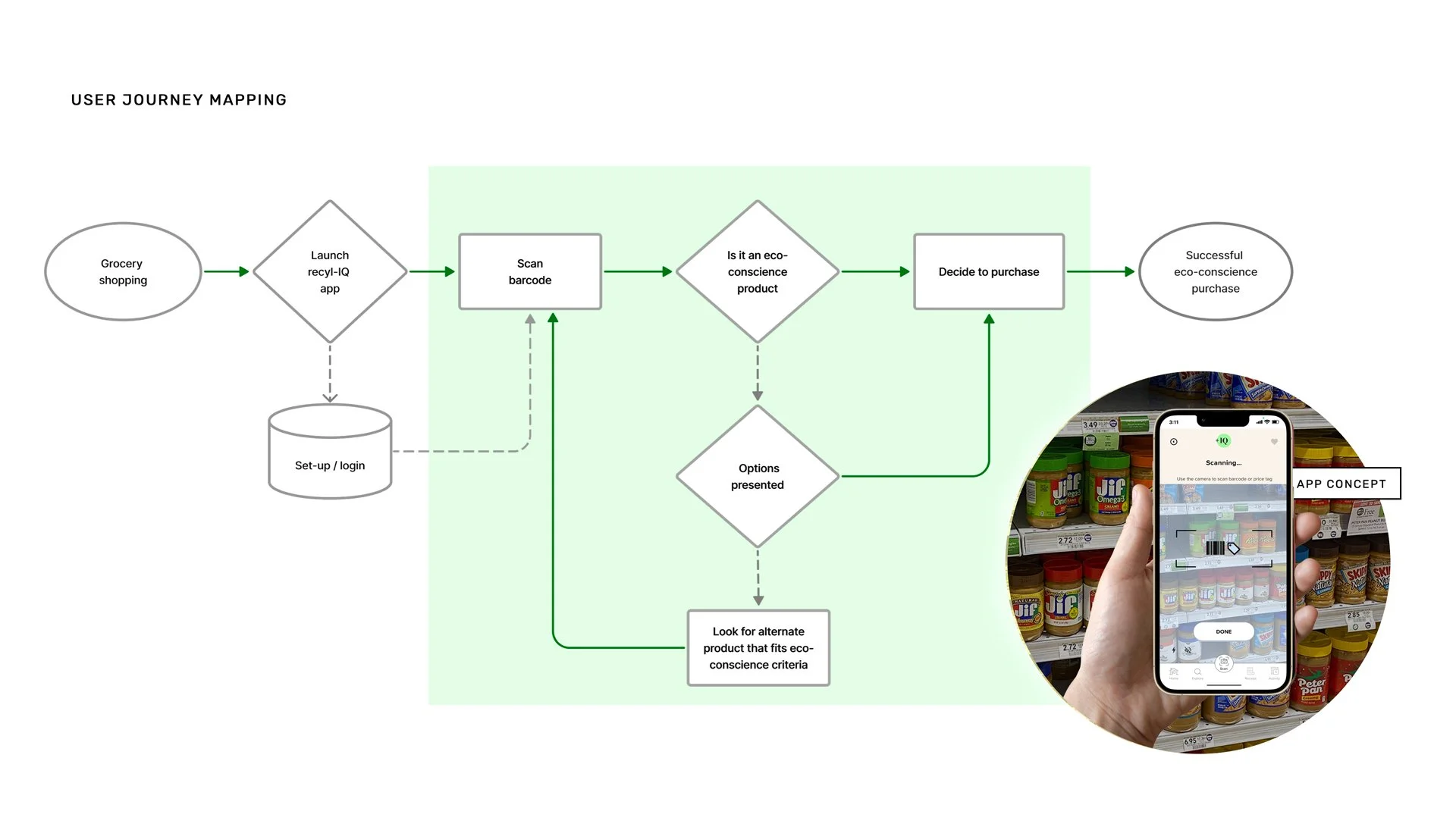
Issue: Sustainable purchasing requires information that is not available at the shelf. Without it, even motivated consumers are making decisions in the dark.
Impact: A single scan surfaces what the product is, how it rates, and what a better option looks like, with price. The choice that was previously invisible becomes the easiest one to make.
Beyond the Scan
At the heart of Recycl+iQ is a simple belief: better decisions happen when better information is available. Not because doing the right thing feels good, but because doing the right thing becomes the easier thing. Knowledge before the purchase doesn't just empower the individual. It redirects buying power. And if there is a sure way to move a company, it is to move its bottom line.
The scan is where that starts. But it's not where it ends.
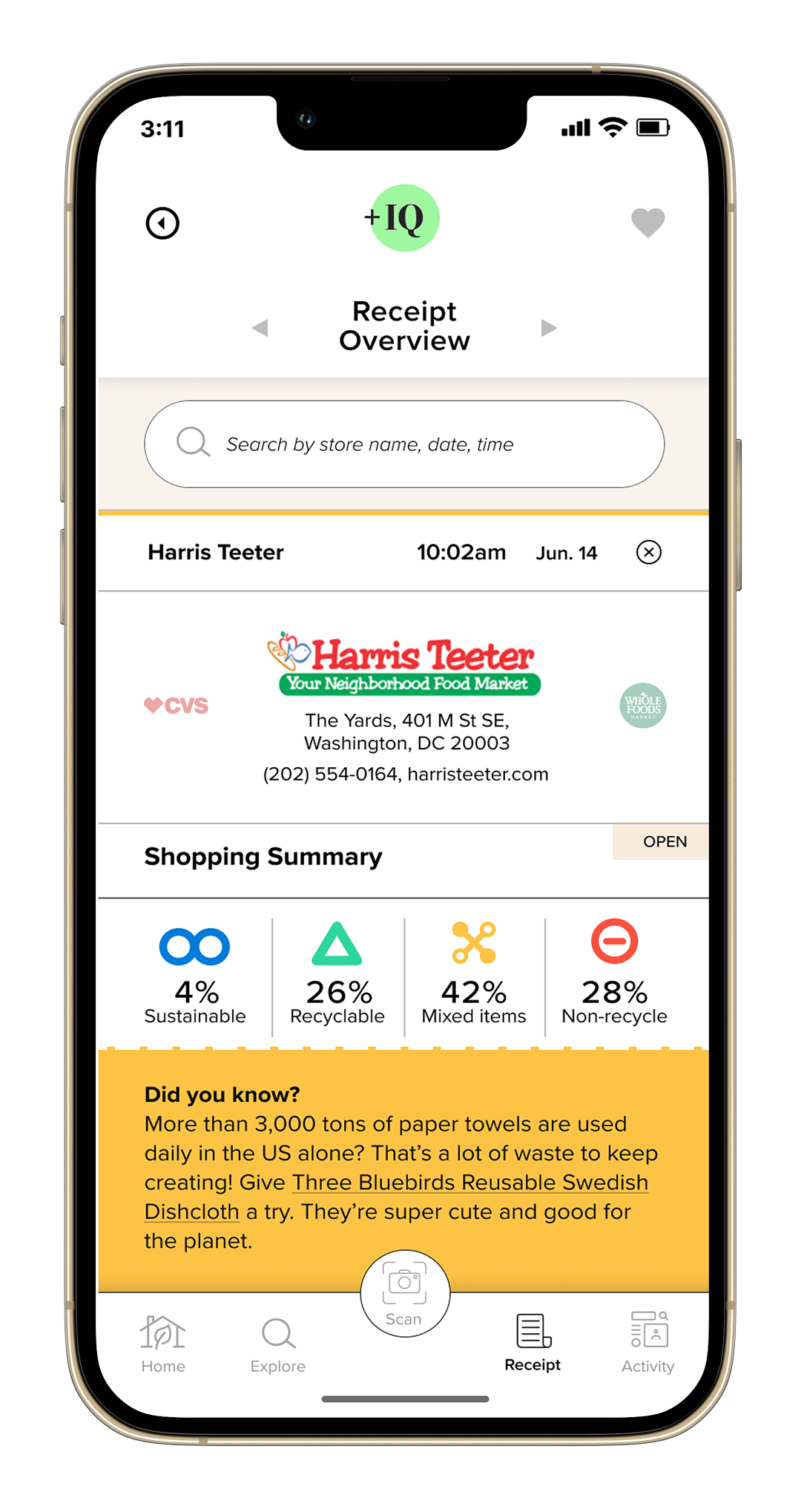
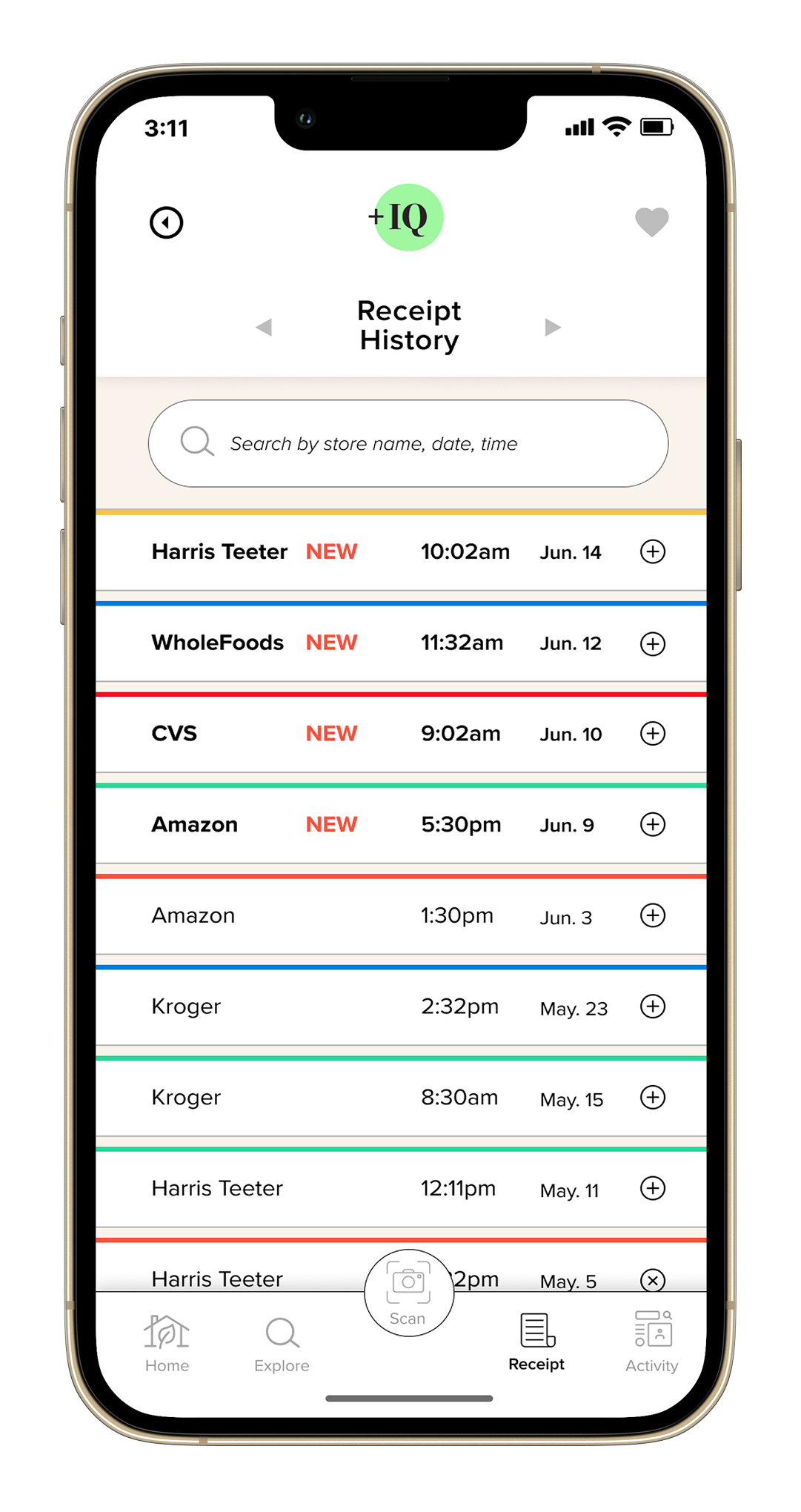
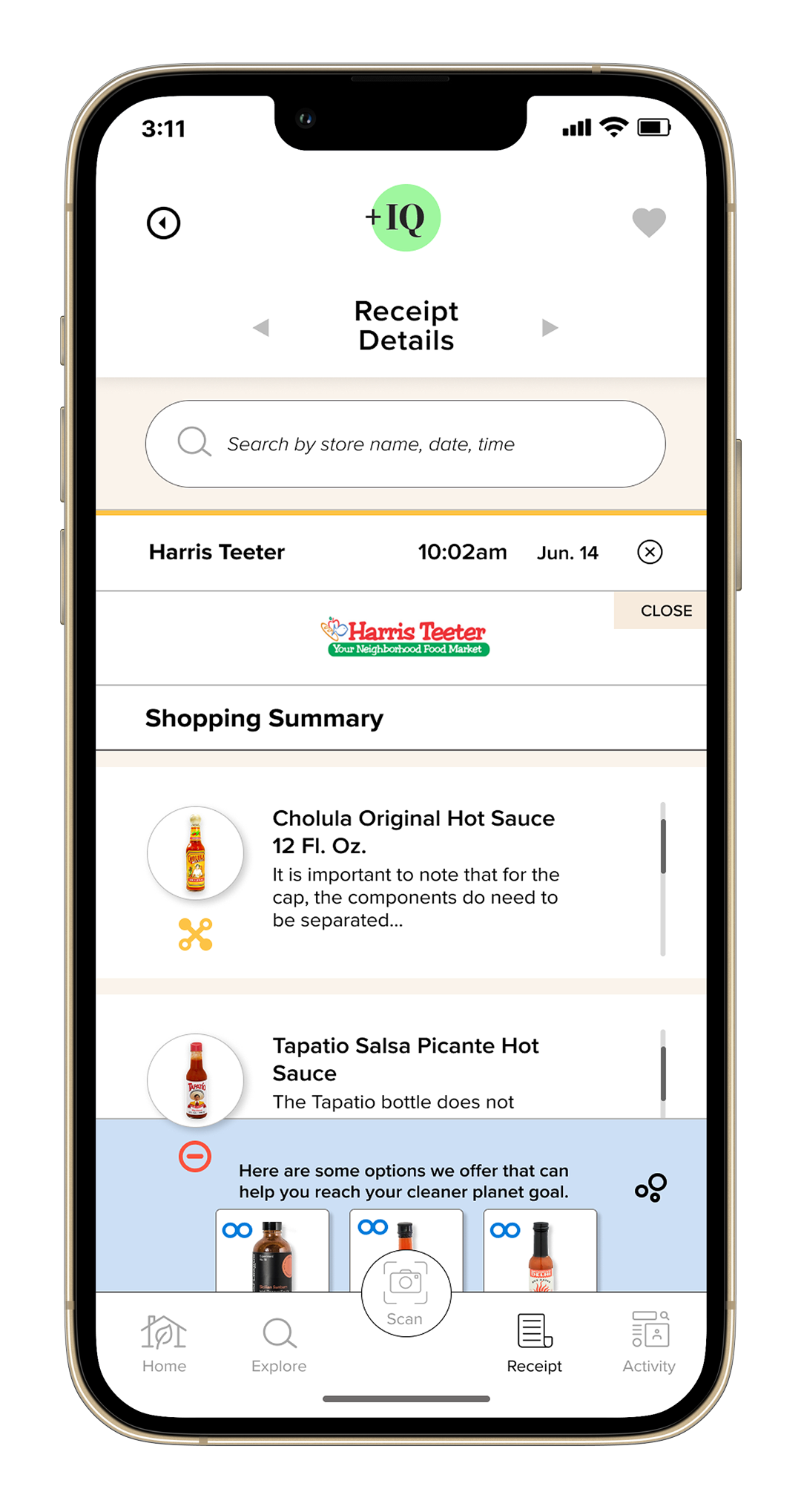
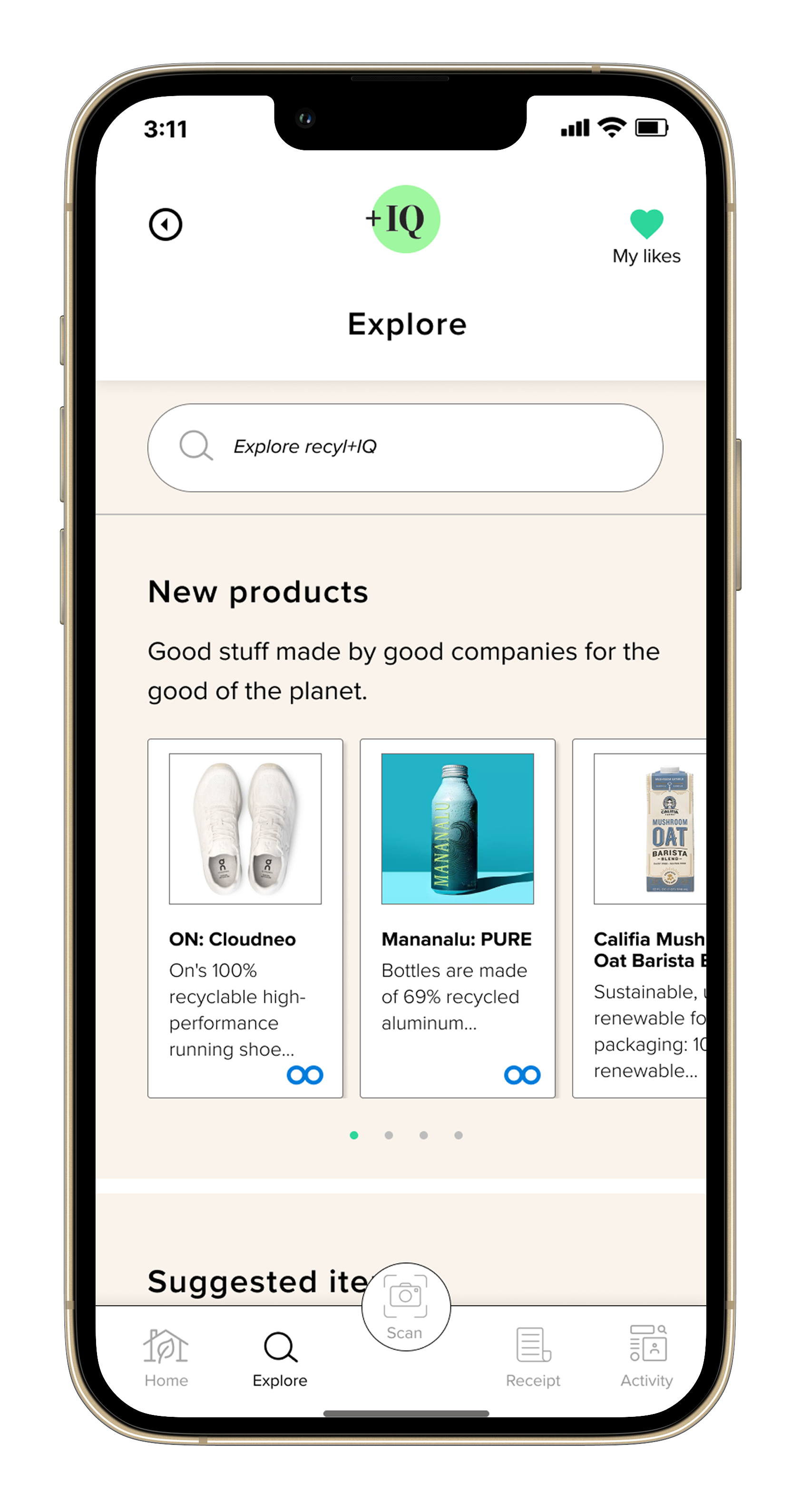
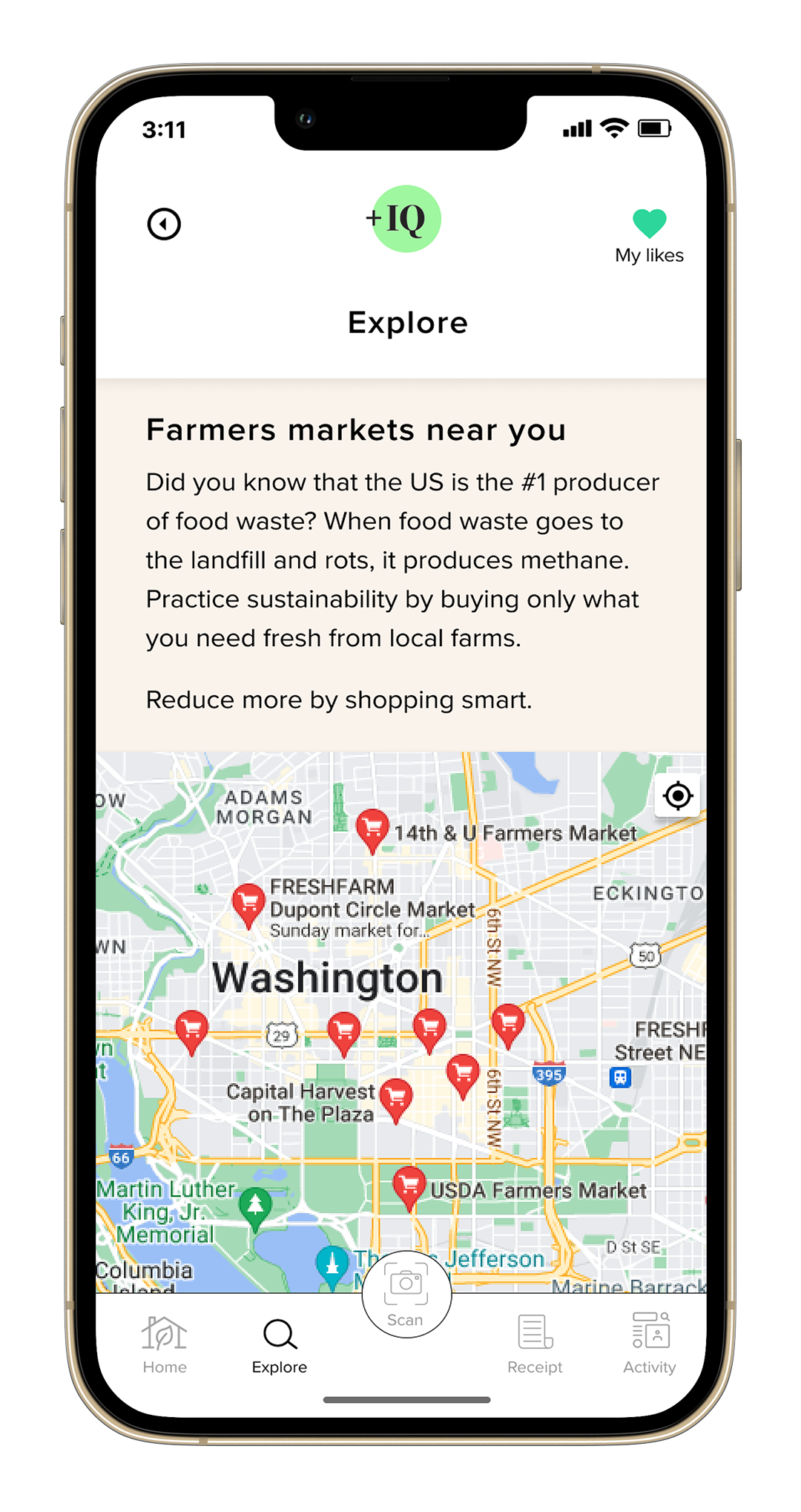
Receipt history lets users see their purchasing patterns over time. The Activity screen tracks progress and builds a sense of forward momentum. Suggestions surface better alternatives proactively, not just at the moment of scan. The Explore feature introduces users to products they didn't know to look for. Together, these features turn a single informed decision into an informed habit.
Deep Dive Prototype Walkthrough
For those interested in exploring the complete product ecosystem, this narrated walkthrough demonstrates the end-to-end experience.
This is a narrated walkthrough of the prototype.What We Learned
Recycl+iQ began as a simple premise: provide sustainability information before a purchase is made, when a decision can still be influenced. User testing validated that premise, but it also revealed that information alone was not enough. The way information was structured and presented proved just as important as the information itself.
One of the most significant findings emerged around sustainability classification. Early testing revealed that users struggled to distinguish products that were fully recyclable from products requiring additional disposal steps. Existing iconography forced multiple conditions into the same category, creating confusion and reducing confidence in the system. Introducing a dedicated Mixed Items category transformed a binary classification model into a more accurate sustainability framework and aligned the experience with user expectations.
Revisiting the concept also surfaced opportunities to improve the information architecture. Early versions of the Receipt experience attempted to combine retailer summaries, shopping history, and purchase analysis within a single workflow. Separating these into distinct layers clarified the experience and better reflected the different questions users were trying to answer: How am I doing at a specific retailer? What shopping trips have I made? What happened during a particular purchase?
Perhaps the most important lesson was recognizing how product maturity changes design priorities. Scanning began as the central interaction, but as features such as Receipt Analysis, Activity Tracking, and Sustainability Insights evolved, the product became less about scanning and more about helping users understand their purchasing behavior over time. Future iterations would continue exploring how navigation and information architecture can evolve alongside the growing complexity of the product.
Recycl+iQ reinforced a principle that extends beyond sustainability: people rarely make better decisions because they are told to. They make better decisions when relevant information appears at the moment it can still influence action. The challenge is not simply providing information. The challenge is making it visible when it matters most.